Video Library
Conversations with senior leaders. Watch on demand.
 Email to watch
What the Springboks Measure That Business Doesn't
FDC Leadership Series. Bob Skinstad of Elixirr with Colin Iles, 17 September 2026.
Lessons From TymeBank's Rise
Cheslin Jacobs, Chief Commercial Officer of TymeBank, on building a bank with no branches, no ATMs and no call centre. Delivered as part of the Future Financial Leadership Programme with The Financial Academy.
How Standard Chartered Ventures Is Transforming Banking
Gurdeep Kholi of SC Ventures and Christian Lindener of Mach49 on whether big banks can build and scale new business models like startups.
How To Build A Growth Engine
Mark Simoncelli and Dave Blakely of Mach49 on building growth engines inside large corporates through venturing and incubation.
In Conversation With Dr Mark Nasila
A conversation with Dr Mark Nasila on data, risk and analytics in financial services.
Artificial Intelligence For Executives
Dr Jay van Zyl on what AI means for financial services, why institutions struggle to adopt quickly, and whether centralised or decentralised models work better.
Corporate Venturing And Routes To Market
Stavros Nicolaou of Aspen Pharmacare on why enabling entrepreneurs on the ground, not ownership changes, is what actually transforms an economy.

The New Rules Of Capital Markets
Louis Geeringh of Futureworld on the shift in capital markets over recent decades, and why most South African companies are still running playbooks business schools have taught since the fifties.
Post Pandemic Strategies
Chris Skinner on banking, blockchain and the strategies institutions need once the disruption settles.
Silicon Overdrive Founders Series
 Email to watch
How Jozi My Jozi Is Rebuilding Joburg, One Block at a Time
AWS Founders Series. Bea Swanepoel of Jozi My Jozi with Colin Iles, 13 October 2026. How a team of about 24 people relit the Nelson Mandela Bridge, rebuilt the Ellis Park precinct and is putting Johannesburg's inner city back together: clean it, make it safe, light it.
 Email to watch
Why WeBuyCars Refused the ERP and Built Its Own
AWS Founders Series. Wynand Beukes of WeBuyCars with Colin Iles, 10 September 2026.
 Email to watch
Capitec at 25: The Inside Story
Capitec group CEO Graham Lee joins Colin Iles on the AWS Founders Series to explain the four founding principles behind 26 million clients, how the bank plans across four time frames at once, where AI is already in production, and why payments is the next space to be disrupted.
 Email to watch
Crossfin: The Quiet Force Behind African Fintech
Dean Sparrow and Anton Gaylard join Colin Iles to unpack how two operators from a small-cap JSE-listed retail IT business became the most consistent fintech investors on the continent. They go deep on backing founders through fraud investigations and near-collapse, why they refuse to fund above-the-line marketing, how they actually price an early-stage deal, and why they would take patient capital over a five-year private equity clock every single time. Recorded live on 16 July 2026 as part of the AWS Founders Series, in partnership with Silicon Overdrive and Amazon Web Services. Full write-up: https://colinilesmedia.com/posts/dean-sparrow-anton-gaylard-crossfin-playbook
 Email to watch
From Paper Loans to AI Banking
Chijioke Dozie is co-founder and CEO of Carbon, a credit-led digital microfinance bank in Nigeria serving consumers and SMEs through a fully digital platform. In this episode we get into why Nigeria's $5 billion consumer credit market is a fraction of South Africa's $500 billion, why the "Bank of Family and Friends" is still the country's most popular lender, and how Carbon went from paper forms and foot soldiers to 8,000 loan applications a day overnight. We also cover funding discipline, the 0-to-1 founder identity crisis, AI in financial services, and why remote work penalises junior employees.
 Email to watch
Building Where Incumbents Won't
You think successful entrepreneurs are fearless. Alan Knott-Craig will tell you the opposite is true. In this conversation, Alan opens up about building Fibertime from scratch, a company on a mission to connect every township home in South Africa with affordable, high-speed fibre internet for R5 a day. He talks about the near-death moments, the co-founder fallout, the times he nearly ran out of money, and why he kept going anyway.
 Email to watch
Inside the $205M Bet on African Tech
Hans Otterling backed Spotify and Klarna before turning his conviction toward Africa. In this conversation, he shares why he left European venture capital to co-found Norrsken22, a $205 million growth-stage fund built for African tech. He makes the case for why timing in Africa today mirrors what he saw in Stockholm in 2006, and why the continent's capital gap is the opportunity, not the problem.
 Email to watch
AI Meets the African Bush
What happens when a South African AI consultancy decides to fly drones over Africa's most iconic game reserves and count every animal they can find? Willem Kellerman and Dirk Strauss, co-founders of CHISL Group and Veriphy, join Colin Iles to tell the full story of Project Gaia: from counting cattle at the world's largest feedlot, to deploying fixed-wing drones across Sabi Sands and Timbavati, to processing 35 million images with AWS H200 GPUs in Johannesburg. This is not a pilot. It's in production.
Why Big Business Must Back Bold Ideas
Startups alone can't scale Africa's future, and traditional investors are falling short. It's time for big business to step in and step up. In this live conversation with Vuyo Mpako, Managing Director of NEXT176, Old Mutual's venture arm, we unpack how Africa's biggest institutions can become launchpads for bold ideas, and why backing entrepreneurs isn't just an opportunity, it's a necessity.
The Clickatell Story
What does it take to stay relevant in tech for two decades? Pieter de Villiers knows. As the co-founder and CEO of Clickatell, he built one of Africa's earliest global tech successes before funding, accelerators, or the word "ecosystem" became startup vocabulary. In this live conversation, we unpack his journey from Stellenbosch to Silicon Valley and back again, and what every founder needs to know about resilience, relevance, and reinvention.
How Mounir Nakhla Bet on Egypt's Unbanked and Built a Unicorn
Would you build a fintech empire by lending money to people banks won't touch? Mounir Nakhla did. In this AWS Founders Series session, we unpack how the founder of MNT-Halan went from financing tuk-tuks in rural villages to building one of Africa's most valuable fintech ecosystems, serving millions across Egypt, Turkey, Pakistan and the GCC. We explore the early risks, the $1M/month burn rate, the pivot away from ride-hailing, the near-failures, the fundraising desert, and the deal-making instincts that helped him scale a billion-dollar company in markets most investors overlook.
Flutterwave and the Future of African Payments
Africa isn't offline, it's disconnected. In this AWS Founders Series interview, Colin Iles sits down with Flutterwave founder and CEO GB Agboola to unpack the real challenges and opportunities in African payments, cross-border commerce, and digital innovation: why Africa's biggest problem is fragmentation, not access, how Flutterwave is building a unified payments superhighway, the future of real-time cross-border transfers with PAPSS, why stablecoins are becoming a major B2B payment rail, and the untapped potential of Africa's SME economy.
Building Venture-Scale Fintech in Africa
What does it really take to scale a fintech from startup to profitability in Africa, and do it publicly listed? Colin Iles sits down with Charles Savage, CEO of Purple Group and founder of Easy Equities, for a wide-ranging conversation on the journey from near-collapse to R90 billion in assets on platform, 1.2 million customers, and a business now generating R100 million in free cash flow. They cover the ZARU stablecoin launch, Revolut's arrival in South Africa, funding a startup on the JSE, partnerships with Discovery, Sanlam, Capitec and Satrix, and why Charles believes AI will define the next decade the way smartphones defined the last.
VALR: Scaling for Humanity?
Colin Iles sits down with Farzam Ehsani, co-founder and CEO of VALR, Africa's largest cryptocurrency exchange by trading volume. Farzam shares the moment he resigned from RMB on his first day back from paternity leave, why he believes the global financial system has too much friction, and how VALR navigated the chaos that destroyed Celsius, BlockFi, and FTX while quietly building one of Africa's most profitable and compliant fintech companies. They cover the liquidity problem that almost killed the business before launch, why VALR KYC'd every customer from day one, the future of stablecoins and payments, and why VALR does not plan to be a crypto exchange forever.
Africa's Next Big Bets
Future Africa co-founder Iyinoluwa Aboyeji tells the AWS Founders Series why global capital will not return, why fintech copycats bore him, and what actually builds a unicorn.
The Go1 Story
What does it really take to turn an idea with African roots into a multi-billion-dollar business? In this AWS Founders Series session, we sit down with Melvyn Lubega, co-founder of Go1, the learning platform that scaled from a handful of online courses to serving more than 17,000 organisations worldwide and earning unicorn status. Go1's journey isn't just inspiring, it's a practical playbook for founders across Africa and beyond who want to build global companies.
African Unicorns: Tjaart van der Walt Talks Tyme
Tjaart van der Walt is the co-founder of TymeBank, Africa's first fully digital, branchless bank and one of the continent's biggest fintech success stories. He is one of the few people on the planet who has built regulated banks across both Africa and Southeast Asia, having led launches in South Africa, the Philippines, and Vietnam. Under his leadership, Tyme Group has attracted high-profile backers including African Rainbow Capital and, most recently, Nubank, Latin America's largest digital bank, which invested $250 million, valuing the group at over $1.5 billion.
Henley Leadership Series
Leadership in an Exponential Age
In this fast-paced and deeply insightful conversation, Colin Iles sits down with Herman Singh, CEO of Future Advisory, board member, professor, and former Chief Digital Officer at MTN and Vodacom, to explore what it really takes to lead in a world of exponential change. From AI and Agentic systems to the death of junior roles, generative tech, collapsing hierarchies, and how we prepare the next generation, this conversation covers it all. Topics include: • Why traditional leadership models are no longer fit for purpose • What CEOs and boards need to do right now to stay relevant • The hype vs. reality of AI in corporates • What agentic AI means for hiring, credit scoring, and auditing • How business schools must adapt • What advice Herman gives his own kids in a world of disappearing entry-level jobs This session is for anyone serious about building future-ready organisations, and futures.

Respect, Power and Accountability with Mteto Nyati
Join us for a powerful conversation with Mteto Nyati, one of South Africa’s most respected leaders, on the theme of Respect, Power, and Accountability. From his roots in a rural trading store to leading giants like IBM, Microsoft, MTN, and Altron, Mteto shares the hard-won lessons that shaped his values and approach. He reflects on the importance of self-awareness, the courage to tackle failing systems, and why purpose must be at the heart of leadership. In this session, Mteto unpacks how respect, when unchallenged, can hinder progress, and how leaders must create cultures where accountability and experimentation thrive. Drawing from decades of experience, he offers insights for leaders navigating the challenges of today and tomorrow.
Leadership Beyond the Textbook with Lincoln Mali
In this powerful conversation, Lincoln Mali, CEO of Lesaka Technologies and author of Blazing a Trail: Lessons for African Leadership, shares the personal stories, hard-won lessons, and leadership philosophies that have shaped his extraordinary career. Key themes covered: • True Leadership Beyond Titles: Why real leadership is about influence, humility, and respect, not hierarchy or ego. • Building a Culture of Trust: How empowering frontline teams drives transformation and turnaround success. • Leading with Purpose: Why financial inclusion and societal impact are essential to long-term business growth. • Vulnerability as Strength: Why showing emotion, acknowledging mistakes, and sharing personal challenges builds deeper leadership credibility. • Education, Resilience, and Mentorship: Lessons from Lincoln’s journey, from apartheid-era activism to executive leadership, and the pivotal role education and community played. • Ubuntu Leadership: Embracing African values of community, shared success, and mutual growth as a model for modern organizations. • Courage to Do the Right Thing: Navigating ethical challenges in both government and corporate sectors, and why personal integrity matters more than external rewards. Lincoln also shares insights from his turnaround journey at Lesaka, his passion for youth development, and his work through the Lincoln Mali Leadership Foundation.
Leading the SABC with Nomsa Chabeli
In this engaging conversation, Nomsa Chabeli, CEO of SABC, shares her remarkable leadership journey, from her marketing roots to leading one of South Africa’s most critical media institutions. Hosted by Colin Iles for Henley Business School, this discussion dives deep into the challenges of leadership in uncertain times, the future of broadcasting, and the strategic decisions shaping SABC’s transformation. Key Takeaways: • The power of purpose in leadership and the courage to take on high-risk roles. • Navigating the massive shifts in the media industry, from digital transformation to regulatory challenges. • How women in leadership often step into roles at organizations in crisis, aka the Glass Cliff. • The importance of resilience, mentorship, and support networks in leadership. • SABC’s big vision for the future, leveraging digital platforms, content archives, and African expansion.
African Business Catalysts
Breaking Barriers With Nombasa Tsengwa
Dr Nombasa Tsengwa, Group CEO of Exxaro Resources, on the path from agronomy to leading a major mining company, and building inclusivity in a male-dominated industry.
My Leadership Journey From Healthcare To Telco And Tech
Dr Ryan Noach, former CEO of Discovery Health, on twenty five years across healthcare, a not-for-profit and launching a bank, and his move to lead DNI.
Bryan Habana On The Power Of Purpose
Bryan Habana on carrying what he learned in elite sport across into business, what transferred cleanly and what did not.
Standard Bank One Hub Series

Predict the Future: How Top CEOs Use Data to Stay Ahead
In an era awash with data, companies are paradoxically floundering in its sea of potential. The road to data-driven decision-making is fraught with pitfalls and many traditional companies are failing to convert their vast reservoirs of data into actionable insights or economic value. The root of the problem isn't technology, it's human: cultural challenges within organisations are the unseen icebergs that sink data-driven initiatives. This interview uncovers why most companies fall short in realizing the full potential of their data assets and outlines a blueprint for charting a successful course. My guest for this interview is Bill Schmarzo. Bill Schmarzo is regarded as one of the top Digital Transformation influencers on big data, data science, design thinking, data monetization and data economics. Bill is currently part of Dell Technology’s core data management leadership team. As the former CTO at Dell EMC, he formulated the company’s Big Data Practice strategy. Bill also served as the Chief Innovation Officer at Hitachi Vantara and is the author of four books on big data, data science, and data economics.

Ethical AI with Kerryn Arnott
You want to supercharge your company, division or teams efficiency, productivity, and decision-making with the incredible potential of AI. But pause for a moment and ask yourself this: Can you harness this power without unintended consequences? I’ll be asking Kerryn Arnott, Standard Bank's in-house ethical AI expert, this and more. Kerryn Arnott is the Head of Legal, Digital Innovation for Standard Banks Corporate and Investment Banking division. Kerryn is fiercely passionate about ethical AI, combining her substantial experience across the financial services industry with a deep understanding of digital ethics. She holds a General Management Programme certification from Harvard University, as well as an MSc degree specializing in AI, Blockchain, and AI Ethics.

Can Banks and Telcos Partner to Improve Society?
How do you make ESG a focal point for your organisation? Historically this has not been easy as it has typically be seen a cost of doing business rather than a business opportunity. But based on my chats with executives within Standard Banks Corporate And Investment Bank, that might be changing. They seem convinced that companies that focus deeply on delivering on sound ESG targets have a distinct competitive advantage. And they also believe that the key to success is to develop wide-ranging partnerships and collaborations. So we have combined forces to create the OneHub Insider Conversations webinar series. I'll be hosting a series of conversations where we interview leaders from a range of organisations about how they have created ESG propositions that have added to their bottom line. First up is ‘Can, should and will banks and telcos partner to improve society?’, featuring insights from Vodacom and Standard Bank.

The Future of Ethical Sourcing
In the past, profit-driven businesses have overlooked their societal impact, resulting in issues like child labour, environmental damage, and inhuman working conditions. However, ethical sourcing can bring competitive advantages, and businesses now realise the benefits of good supply chain management. During the open dialogue, I explore the value of ethical sourcing for companies and investors, its impact on the global community, and what the future may hold for businesses that embrace sustainable development goals. And I’m joined by social entrepreneur Justin Dillon and Standard Bank's digital ESG lead, Joel Buatre.
Sybrin Game Changers

The Future of Blockchain with Monica Singer
I ask Prof. Monica Singer to share her vision for the future of blockchain and whether it's changed with the recent bloodbath caused by FFX. We also explore whether DeFi's will disrupt financial services and how DAO's might change the very fabric of corporations.
Inclusive Innovation with Tashmia Ismail
Colin Iles chats with Tashmia Ismail, founder of Youth Employment services SA about inclusive innovation. What is it? Does it work? We also dive into Tashmia's personal journey and ask whether she ever felt that men had an unfair advantage in the workplace.
How to Build a Viral Super App
Sybrin's Game changers explore the individuals and technologies that are transforming industries. In this session, Colin Iles will be asking Gour Lentell, founder of Moya, how he created a viral super app. With over 6 million users and hundreds of thousands of new joiners each month, I'm wondering just how big moya could get?
The Future of Financial Crime
Game changers explore the individuals and technologies that are transforming industries. In this session, Colin Iles chats with Absa's Group Head Of Financial Crime, Nic Swingler, to learn more about the true size and scale of financial crime and what our institutions are doing to fight back. They'll also be exploring how technology is a game-changer, but that goes for both criminals and institutions alike.
Is Self Sovereign Identity Going Exponential?
Your identify should be something which is private, controllable and portable. Yet despite the technological revolution we are living through, identity management is still as objectionable as ever, which is allowing criminals and companies (particularly the social media giants) to know more about you than can ever be justifiable. In this discussion I ask Andrew Baker, AWS's Head of EC2 Engineering and a surprise guest, to share their views on whether Self Sovereign Identity management could be the solution and how likely it is to become a reality.
Huawei Future of Finance
The Power of Partnerships with Tauriq Keraan
Collaboration has become paramount in many sectors and the financial industry is no different. What happens, for example, when a financial institution harnesses the full power of partnerships? If anyone can answer that, it will be Tauriq Keraan, the CEO of TymeBank, who is perhaps best known for their unique, market-leading collaboration with the South African supermarket giant, Pick N Pay. With over 12 years of building and scaling digital banking businesses in South Africa, Tauriq is uniquely placed to share his ideas about partnerships, collaboration and the future of banking!
The Future of Banking Is Open?
I chat with Andre Hugo, Founder & CEO about his latest venture, Spot Money.
Behavioural Banking with Hylton Kallner
Starting as a specialist health insurer in the late 90's, Discovery has now grown to become one of South Africa's biggest success stories. Built on a strong sense of purpose, they now have over 6 millions customers, a global footprint and a diverse set of financial offerings. In this session I chat with Discovery Bank CEO Hylton Kallner to try and learn more about what has helped to make Discovery so successful, why the decided to move into banking and what they hope to achieve over the coming years. I'm also hoping to understand more about how purpose drives their strategy and how they have created a culture many of their competitors would love to emulate. And I can't think of anyone better to ask than Hylton, as he has been with the firm since the start.
What Can Traditional Banks Learn from Neobanks? With Craig Bond
Veteran banker turned neobank builder Craig Bond and Colin Iles on whether neobanks are a real threat to incumbents, what it takes to build one, and what banks can learn from them. Ten parts, played in sequence.
The Future of Crypto with Monica Singer
Prof Monica Singer and Colin Iles on decentralised finance: whether crypto can become quicker, cheaper and greener, how governments should respond, when consumers benefit, and the risk to incumbent banks. Six parts, played in sequence.
Deel Future of Work

How Do You Build a $1.25 Billion Business in a Pandemic?
Deel was created at the height of the pandemic. Yet during that period it's managed to raise over $200mill, build presence in over 150 countries, onboard thousands of business customers and achieve a valuation of $1.25billion......, in less than two years!!! I'll be asking the Forbes featured, Andreessen Horowitz backed, Deel co-founder, Alex Bouaziz, how he managed to achieve such incredible global growth with a distributed workforce, what the future work-force model looks like and why incumbents that don't transform their staffing models will find themselves at a competitive disadvantage.
Is the Traditional Staffing Model Dead?
The last decade has already seen significant change in how a minority of companies organise their workforce. Uber and Amazon, for example, have led the rise of the gig-economy. Apple and Google have shown that the best employees don’t need to have college degrees. And Zappos and Valve have showcased how you can build multi-billion dollar companies without hierarchies or organigrams. But these are still rare examples in a world, where most corporations still rely heavily on the business models that were developed during the industrial revolution. But could 2020 be a tipping point, where the new models being tested by some of the fastest-growing companies in the world, go mainstream? The confluence of inter-generational change, new exponential technologies and of course the impact of covid-19 are forcing companies to reassess how best to organise themselves. In this recording Colin Iles asked Dr. John Wentzel, CEO of the leading workforce solutions partner Adcorp, to share his observations on how the relationship between companies and staff is already changing and the risks and opportunities these new work models create.
iOCO Inspire
Can Business Leadership South Africa Achieve Its Purpose? With Busisiwe Mavuso
Busisiwe Mavuso, CEO of Business Leadership South Africa, talks to Colin Iles about whether BLSA can achieve its purpose. Inspire Series 3, Episode 8.
Purpose and the Circular Economy with David Katz
David Katz, founder and CEO of The Plastic Bank, talks to Colin Iles about purpose, circular economies and what The Plastic Bank shows is possible. Inspire Series 3, Episode 7.
Using Purpose to Build High-Performance Teams with Andrew Wood
Andrew Wood, CEO of The Unlimited, talks to Colin Iles about using purpose to build autonomous, high-performance teams. Inspire Series 3, Episode 6.
Purposeful Leadership from a Global Perspective with Colin Coleman
Businessman, academic and public figure Colin Coleman talks to Colin Iles about purposeful leadership from a global perspective. Inspire Series 3, Episode 5.
Using Purpose to Transform with Iman Rappetti
Journalist, author and businesswoman Iman Rappetti talks to Colin Iles about using purpose to transform people and organisations. Inspire Series 3, Episode 4.
Do Boards Need New Purpose? With Prof Shirley Zinn
Professor Shirley Zinn, author and board member, talks to Colin Iles about whether boards need a purpose beyond profit. Inspire Series 3, Episode 3.
Leadership Lessons from Rob Paddock
Rob Paddock, co-founder of Get Smarter, chats with Colin Iles about what leadership lessons he learnt whilst building the $100mill education platform, Get Smarter.
Purposeful Leadership in Unicorns with Stafford Masie
Entrepreneur Stafford Masie talks to Colin Iles about his journey and the role purposeful leadership plays in so-called unicorns. Inspire Series 3, Episode 2.
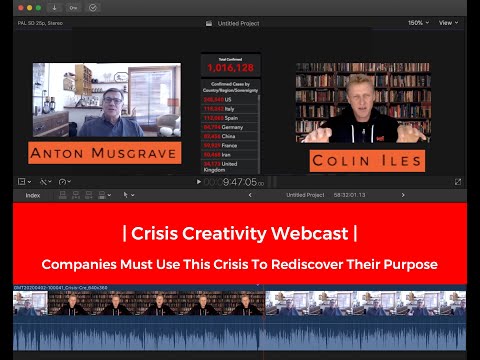
Crisis Creativity: The Right Time To Redefine Your Company
Anton Musgrave of Futureworld on creativity under pressure, and why a crisis is the moment to redefine what your company is for.
Breaking The Rules And Winning
Charles Savage, CEO of Easy Equities, on building a business with unorthodox models and why the conventional route was never an option.
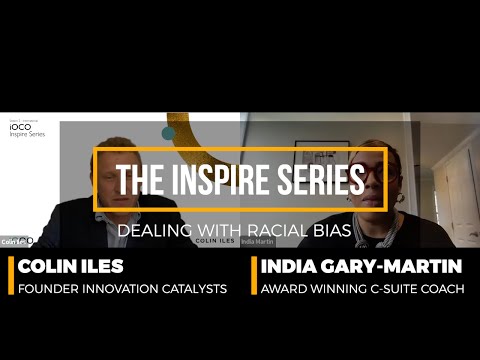
Racial Bias in the Workforce
India Martin talks to Colin Iles about what companies can (and should) be doing to manage racial bias within the workforce.
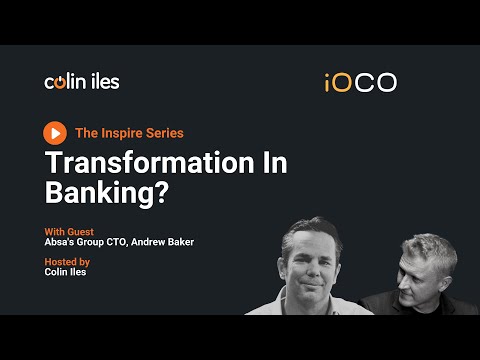
Transformation in Banking with Andy Baker
The Inspire Series - Transformation in Banking. Colin Iles (founder of innovation catalysts) chats with Andrew Baker (CTO of Absa Group) about how he's attempting to transform Absa's offering. They cover everything from how cloud and open-source is benefiting the industry to why email and PowerPoint are cancerous for organisations.
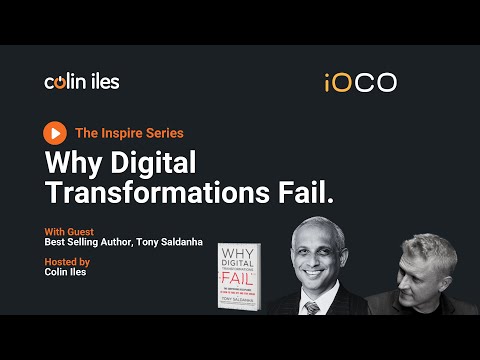
Why Digital Transformations Fail
Tony Saldanha and Colin Iles talk about why digital transformations fail and what leadership can do about it.
Using Digital Communities to Transform with Gina Bianchini
Gina Bianchini, founder and CEO of Mighty Networks, talks to Colin Iles about using digital communities to transform a business. Inspire Series 2, Episode 3.
Transforming EOH with Stephen van Coller
EOH Group CEO Stephen van Coller talks to Colin Iles about his journey transforming EOH and what it taught him about leadership. Inspire Series 2, Episode 2.
Leadership in an Exponential World with Anton Musgrave
Futurist Anton Musgrave, founder of Futureworld, talks to Colin Iles about what leadership looks like in an exponential world. Inspire Series 1, Episode 5.
How to Pivot an Organisation by Expanding Your Mind with John Vlismas
Businessman and social commentator John Vlismas talks to Colin Iles about how a leader pivots an organisation by first expanding their own thinking. Inspire Series 1, Episode 4.
How to Grow a Multinational Subsidiary in South Africa with Sneha Shah
Sneha Shah, Managing Director of Refinitiv's Business Accelerator, talks to Colin Iles about how to grow a multinational's subsidiary in South Africa. Inspire Series 1, Episode 3.
In Conversation with Zafar Mahomed
Colin Iles talks to Zafar Mahomed about purpose-led leadership in the second episode of the iOCO Inspire Series.
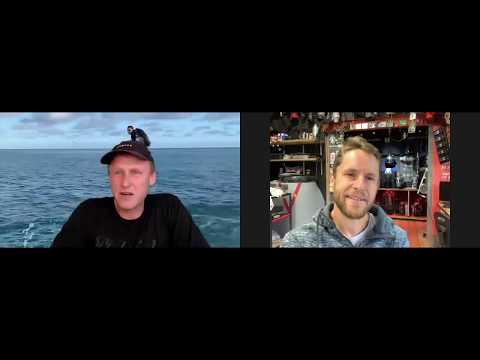
How To Invent The Impossible
Richard Browning, founder of Gravity Industries, on building a jet suit from a garage and what it takes to pursue something conventional wisdom says is impossible.